Why Fitness Plans Fail (Without a System)
Fitness routines tend to hold when daily life is predictable. When schedules are stable and demands are contained, repetition does most of the work. Behaviors that once required effort become automatic, supported by timing, cues, and environment rather than constant decision-making. Many people experience this period as discipline or motivation, even though the underlying driver is structural consistency.
As life evolves, that structure is often disrupted. Work hours lengthen or become less predictable, family responsibilities increase, and sleep is interrupted. Stress then accumulates. Travel, illness, or caregiving responsibilities alter daily rhythms. These changes do not necessarily reduce someone’s interest in their health, but they do change the conditions under which health behaviors must operate.
Behavioral research has long shown that habits are context-dependent. Actions repeated in a stable environment become neurologically efficient because the brain relies on cues and routines rather than conscious effort. When those cues disappear or shift, the behavior does not simply resume at will. The brain must re-engage decision-making systems that are already under strain. This is why returning to a routine often feels harder than starting one, even for people with a long history of consistency.
Traditional fitness plans are typically designed around a predefined sequence of actions. They specify frequency, volume, and progression, often assuming regular access to time and energy. Under stable conditions, this clarity can be helpful. The plan reduces uncertainty and provides a sense of direction. When conditions change, however, the plan often ceases to offer guidance. The instructions remain intact, but their applicability diminishes.
Neuroscience research on cognitive load helps explain what happens next. When external demands increase, the brain prioritizes tasks perceived as urgent or unavoidable. Activities that require planning, negotiation, or reinterpretation are more likely to be postponed. If a health routine lacks built-in flexibility, even a short interruption can introduce uncertainty about how to proceed. That uncertainty increases mental friction, making inaction more likely than adaptation.
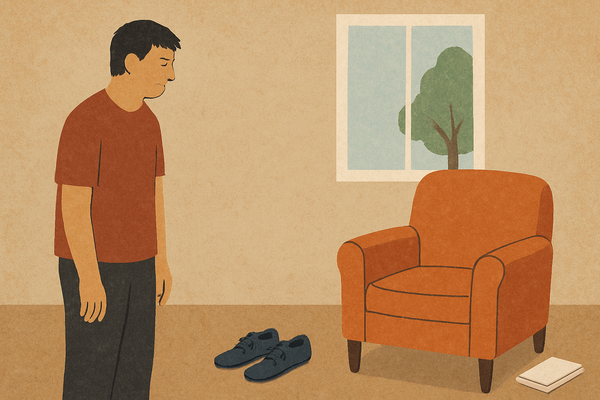
In these moments, people often interpret difficulty as a personal failure rather than a structural one. The language of discipline and willpower fills the gap left by missing design. Yet studies on behavior change consistently show that effort alone is a poor predictor of long-term adherence. What matters more is whether the behavior remains easy to access under varying conditions.
Wellness systems approach this problem differently. Instead of prescribing a single sequence, they are designed to remain usable across a range of contexts. They account for fluctuations in time, energy, and stress. Rather than asking someone to maintain a fixed level of output, they provide guidance for adjusting effort while preserving continuity.
From a neurological perspective, this reduces decision fatigue. When acceptable alternatives are defined in advance, the brain is not forced to negotiate from scratch during periods of stress. Cues remain intact even if intensity changes. The behavior stays connected to identity and routine, rather than being suspended until conditions improve.
Missed sessions are an expected part of this design. Research on habit persistence suggests that occasional lapses do not predict failure in isolation. What predicts disengagement is the absence of a clear path forward. When people are unsure how to resume, they delay. That delay compounds, increasing psychological distance from the behavior. Systems mitigate this by defining return points and maintaining continuity even when execution is imperfect.
Stress plays a similar role. It does not inherently disrupt health behaviors; it reveals whether the structure supporting those behaviors can tolerate strain. Systems that allow compression during high-demand periods and expansion during lower-demand periods protect long-term engagement. This elasticity reduces the repeated cycle of stopping and restarting that characterizes many fitness trajectories.
For adults navigating leadership roles, caregiving, career transitions, or prolonged stress, this approach aligns with how life actually unfolds. Health behaviors become part of the infrastructure supporting daily functioning rather than an additional demand competing for limited resources. Over time, this reduces injury risk, burnout, and the emotional burden often associated with maintaining routines.
This perspective shapes how I work as a coach. Rather than distributing workout or nutrition plans, my focus is on helping men build personalized wellness systems that reflect their real circumstances. That means understanding schedules, stress patterns, responsibilities, and long-term health priorities, then designing structures that remain usable as those factors change.
The objective is not constant optimization or uninterrupted progress, but rather stability. Research consistently shows that behaviors maintained at a moderate, sustainable level over long periods produce better health outcomes than cycles of intense effort followed by disengagement. Systems support that stability by reducing friction and preserving continuity.
When health is treated as a system rather than a sequence, it becomes less fragile. It no longer depends on ideal weeks or uninterrupted routines. It adapts alongside life, which is ultimately what allows it to endure.
Stay safe, stay healthy!
Martin Foley, Founder - Architecting Wellness