How to Train Your Brain to Love Exercise (Even If You Hate It Now)
Most people don’t naturally love exercise. The brain avoids discomfort and seeks immediate rewards (Schultz et al., 1997). If workouts feel like punishment, you won’t want to do them. The goal is to make movement enjoyable.
1. Start Small and Easy
Your brain resists big changes. Overcommitting leads to burnout. Start with something manageable.
✔ Walk for 5 minutes ✔ Do one easy exercise ✔ Pair movement with music or a podcast
Source: Fogg (Tiny Habits), Lally et al. (Habit Formation, 2010)
2. Use Dopamine to Make Exercise Enjoyable
Dopamine drives motivation. If workouts feel boring or exhausting, you won’t stick with them.
✔ Attach a reward (favorite playlist, post-workout smoothie) ✔ Gamify progress (track streaks, hit small goals) ✔ Choose activities you enjoy (sports, dance, hiking)
Source: Huberman (Dopamine & Habit Loops), Schultz (Dopamine & Motivation, 1997)
3. Shift Your Identity
People who exercise consistently often see movement as part of who they are.
✔ Say “I move every day” instead of “I have to work out” ✔ Focus on how movement makes you feel ✔ View fitness as self-care, not punishment
Source: Dweck (Growth Mindset), Ryan & Deci (Self-Determination Theory, 2000)
4. Make It Social
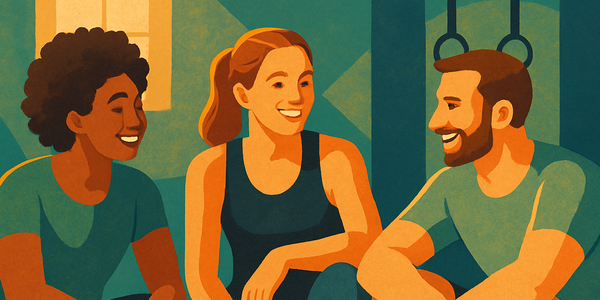
Social support makes exercise easier to maintain (Carron et al., 1996). Even solo exercisers benefit from connection.
✔ Join a group class or find a workout partner ✔ Share progress with friends ✔ Participate in fitness challenges
Source: Carron et al. (Social Support in Fitness, 1996)
Final Thoughts
Exercise gets easier when you make it rewarding. Start small, create positive associations, and involve others. Over time, movement will feel natural.
Stay safe, stay healthy!
Martin Foley - Founder, Architecting Wellness