How to Get Back on the Horse Using Psychology, Patience, and the Long Game

Today is my first day back in my master’s of psychology program after taking a few months off. When my grandfather’s health started to decline earlier this year, school stopped being my main focus. He passed in June, and since then life has moved quickly. 2025 has been a year of ups and downs where I moved in with my partner, started a business, navigated uncertainty, and got engaged (!!!!).
The past year has taught me a lot about patience. The lessons I have learned connect to the idea of "getting back on the horse," and over the course of this year I have learned it is not just a motivational phrase. Psychology gives us a better understanding of why stepping away is sometimes necessary and why returning slowly is often the best approach.
The theory of self-efficacy helps explain why adversity can make even simple tasks feel heavy. When you believe you are capable, you take action more easily. When stress and grief pile up, confidence in your ability drops. That shift makes daily responsibilities harder than they once felt.
Maslow’s hierarchy of needs shows that in times of loss or transition, our attention shifts toward stability and belonging. Higher goals like career growth or fitness progress often fall back. This does not mean failure, but rather itt reflects a natural adjustment to protect mental health and energy.
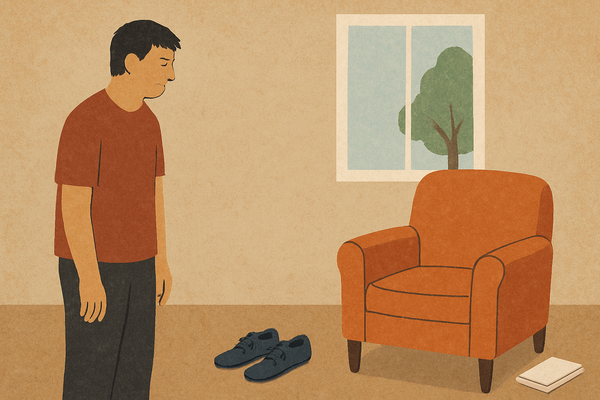
Cognitive appraisal theory tells us that the meaning we assign to a break is what shapes our emotions when we return. If you see the pause as proof you lost ground, frustration grows. If you see it as a conscious decision to protect your well-being, you carry less guilt.
Researchers call this the resilience feedback loop. Every time you step back into a pursuit after hardship, you prove to yourself that recovery is possible. Each return builds the expectation that you can do it again in the future.
In the first three months of grad school, I finished six classes quickly. It felt natural until my grandfather’s physical decline shifted my priorities. I paused. That was not a loss in motivation because, as humans, if everything is important at the same time, nothing really is.
The same dynamic shows up in my fitness. In 2024 I set personal bests in nearly every race I ran. This year training has looked different. I still run, but my progress is slower. The important part is that it is not gone. Fitness remains in my life, even if the intensity is lower for now.
I think of it like a stove. Not every pot can be on the front burner at once. Sometimes a goal has to simmer at low heat on the back burner while another needs to boil on the front burner. As long as the flame is still on, it has a place.
Here are three ways to use these concepts in your own life.
- Reframe the pause.
Ask yourself what need you were meeting when you stepped away. Often it is rest, healing, or caring for someone else. Seeing the break as purposeful can reduce guilt. - Focus on self-efficacy first.
Start with small wins that rebuild confidence. Complete one assignment. Go for a short run. These actions signal that you can still follow through, which restores belief in your ability. - Keep the flame on.
Even when progress slows, stay connected to the goal in a small way. Read one article related to your studies. Do two workouts a week instead of five. The consistency of presence is what matters most.
Resilience is rooted in how you frame setbacks and how you choose to re-engage. Patience is an active choice, and a decision to keep something in your life even when progress looks different.
This year has reminded me that slowing down is part of the process. School, fitness, and business will all have seasons where they move forward quickly and seasons where they wait.
If you want to get back on your horse, it doesn't have to be perfect. Keep the burner on, and when you're done boiling one pot of water (even if you might have never saw it coming), it will be time to move that pot you're a bit more happy about that's on the back burner up. Stay patient, present, and aware until that next season of growth has time to arrive.
Stay safe, stay healthy!
Martin Foley - Founder, Architecting Wellness